-
Lost and Found: Reuniting Missing Participants and Lost Pensions
Kathryn L. Moore
In the United States, the problem of missing participants and lost pensions is huge. Although there is no precise estimate of the size of the problem, the PBGC reports that more than 80,000 workers have unclaimed pensions worth more than $300 million and Terry Dunne of Millennium Trust Company has made “an educated guess based on government and industry data that more than 900,000 workers lose track of 401k-style, defined-contribution plans each year.” Anecdotally, Kyle Garrett posted on July 8, 2020, that in his 15 years at the Pension Rights Center, the most frequent question he has received from callers ...Read More
-
Kentucky Legal Ethics Deskbook
Richard H. Underwood, Todd B. Eberle, Timothy S. Chase, Kurt X. Metzmeier, and Tracy J. Taylor
Sixth Edition
The latest edition of the Deskbook maintains the 3-volume format and for the first time exists only in an electronic version which is organized as follows. Volume I collects all the ethics rules used in Kentucky and includes the current Kentucky Rules of Professional Conduct, the Kentucky Rules of Professional Conduct (1990-2009), the Kentucky Code of Professional Responsibility (1971-1990), the Kentucky Canons of Professional Responsibility (1946-1971), and the Kentucky Code of Legal Ethics (1903-1946). A convenient index to all rules, codes, and canons is also included. The Kentucky Procedures for Disciplinary Enforcement (SCR 3.140-3.520), bar admission rules (SCR ...Read More
-
Kentucky Evidence Courtroom Manual
Richard H. Underwood and Glenn Weissenberger
This convenient softbound manual is designed specifically for courtroom use and offers judges and practitioners many trial-tested features that not only provide fast, accurate answers to evidentiary questions, but also guide the user to the underlying authorities and secondary sources.
-
Owen & Davis on Products Liability
Mary J. Davis and David G. Owen
Owen & Davis on Products Liability, 4th is a comprehensive guide to all aspects of products liability law and practice. In this 4th edition, two of America's leading products liability scholars bring their long experience and sharp insights to bear on all aspects of products liability law.
Of particular significance is the dramatically expanded treatment of design and warnings defects, as well as the many twists and turns in the evolving law of federal preemption of products liability claims, among many other areas.
-
Products Liability and Safety: Cases and Materials
Mary J. Davis and David G. Owen
While retaining a great majority of prior cases and materials, this edition adds a number of important new cases and legislative developments, makes minor organizational enhancements, and adds depth to the most important sections. The 8th edition continues to stress developments in the evolving meaning of “defectiveness” and problems of proof—both generally and arising from the Supreme Court’s Daubert v. Merrell Dow decision.
-

Benefits, drawbacks, and risks of AI
James M. Donovan
The specter of the impact of artificial intelligence [AI] on law and legal education casts a long and uncertain shadow. Its mix of enthusiasm and trepidation can arise from a thin idea of what the label refers to. Four components differentiate AI from even high-end automation: Big data and predictive analytics, deep learning software, cloud computing, and natural language process. From the perspective of the person on the street though, is captured as “the art of creating machines that perform functions that require intelligence when performed by people,” centering on the ability to make independent choices. While that gloss may ...Read More
-
Elections as Duels
Joshua A. Douglas
In the song "The Election of 1800," James Madison exclaims, "It's crazy that the guy who comes in second becomes Vice President." Jefferson - who had just won the presidency but faced the reality that his de facto running mate-turned-rival, Aaron Burr, was becoming the vice president, responds, "Yeah, you know what? We can change that. You know why? ... 'cuz I'm the President."
The Constitution, however, does not give the president the power to change the constitutional structure for electing the president and vice president. As Jefferson knew, only a constitutional amendment can do that. Yet Jefferson's vision of ...Read More
-
Lowering the Voting Age from the Ground Up: The United States' Experience in Allowing 16-Year Olds to Vote
Joshua A. Douglas
Since a constitutional amendment in 1971, the voting age in America has been 18 for virtually all elections nationwide. In 2013, Takoma Park, Maryland lowered the voting age to 16 for its local elections. Several other cities in Maryland followed suit. Then, in 2016, Berkeley, California voters approved a ballot measure to lower the voting age for school board elections, and San Francisco voters narrowly rejected a similar measure for all local elections. The debate has now spread to other places, with additional cities, states, and even Congress considering the issue. This chapter tells the recent stories of these debates, ...Read More
-
The Stolen Poem of Saint Moling
Brian L. Frye
It’s a truism of copyright scholarship that the modern concept of the author didn’t exist until the modern era. The medieval and Renaissance author was a vehicle for the text, but the modern author is the creator of the text. And in the eighteenth century, the Romantic movement transformed authorship into self-expression. This individualization of authorship enabled the creation of copyright. While the printing press made commercial publishing possible, the modern concept of the author created “literary property.” But is the truism entirely true? The concept of the author has certainly changed over time, and taken different forms in different ...Read More
-
Technology Transfer and the Public Good
Brian L. Frye and Christopher J. Ryan Jr
Universities everywhere are increasingly being encouraged to translate their research findings into practical applications that will further the common good through technology transfer, a process in which intellectual property (IP) laws and systems play a central role. This Research Handbook skilfully places IP issues in technology transfer into their historical and political context whilst also exploring and framing the development of these intersecting domains for innovative universities in the present and the future.
-
Federal Courts and Civil Rights: Juidice v. Vail
Jane Bloom Grisé and Michelle C. Grisé
Federal Courts and Civil Rights: Juidice v. Vail is a Deep Dive into the story of Juidice v. Vail, the Supreme Court case that challenged the constitutionality of the New York civil contempt statutes. Introduces readers to the life cycle of the case from its inception to its resolution. Explains how civil procedure is the toolkit that determines every move in a case and how federal jurisdiction may impact the success or failure of a case by controlling access to the legal system.
-
Understanding Employee Benefits Law
Kathryn L. Moore
Understanding Employee Benefits Law is designed to provide readers with a broad overview and understanding of a vast and complex area of the law. Addressing both pension plans and health care plans, the book includes a broad overview of our nation's employment-based health care system, the Affordable Care Act (ACA), and the ACA's effect on employer-provided health care plans. The second edition incorporates the most significant amendments to employee benefits law enacted in the Further Consolidated Appropriations Act, 2020, and includes discussions of the Circuit Court decisions in three cases that were pending before the Supreme Court at the time ...Read More
-
Why Is There So Much Pre-Retirement Liquidity in the U.S. Pension System?
Kathryn L. Moore and John Turner
Some analysts argue that there is a retirement savings crisis in the United States. While the extent of the crisis is contested, most analysts agree that retirement savings in this nation is inadequate. Although the reasons for the retirement savings shortfall are many and complex, this paper focuses on one factor that leads to inadequate retirement savings in the United States: pre-retirement liquidity or leakage.
Pre-retirement liquidity or leakage refers to the ability of individuals to withdraw money from their retirement savings account prior to retirement and use that money for nonretirement purposes. The Employee Benefit Research Institute (EBRI) writes, ...Read More
-
Civil Procedure: A Context and Practice Casebook
Scott Bauries, Gerald Hess, and Theresa Beiner
The second edition of Civil Procedure: A Context and Practice Casebook is thoroughly revised and updated to facilitate effective teaching and student learning. New principle cases illustrate current developments in personal jurisdiction, supplemental jurisdiction, pleading, discovery, and joinder. Each chapter includes new and revised notes and exercises. The accompanying teacher s manual reflects the changes in the casebook and includes 90 multiple choice questions to help professors and students assess the effectiveness of teaching and learning throughout the course.
-
Developing Moral Standards for Taxation
Jennifer Bird-Pollan
Decisions regarding the proper levels and forms of taxation are not merely questions of economics. Instead, taxation should be seen as the manifestation of a nation’s philosophical ideals of distributive justice. As such, legislators must consider the underlying philosophical beliefs of their constituents in determining the tax laws. Those philosophical beliefs should then inform decisions regarding the form those taxes should take, and amount of tax that the government should impose. This Chapter considers a variety of political philosophical positions that are common in contemporary societies, and then evaluates how a legislator might incorporate those views into the creation of ...Read More
-
Cases and Materials on the Law of Torts
Mary J. Davis, George Christie, Joseph Sanders, and W. Jonathan Cardi
A vehicle for teaching first-year students the essential techniques of case analysis and legal method. Throughout, the book is modified to include developments in tort law since the fifth edition was published in 2012.
-
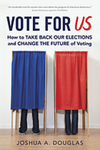
Vote for US: How to Take Back Our Elections and Change the Future of Voting
Joshua A. Douglas
An expert on US election law presents an encouraging assessment of current efforts to make our voting system more accessible, reliable, and effective. In contrast to the anxiety surrounding our voting system, with stories about voter suppression and manipulation, there are actually quite a few positive initiatives toward voting rights reform. Professor Joshua A. Douglas, an expert on our electoral system, examines these encouraging developments in this inspiring book about how regular Americans are working to take back their democracy, one community at a time. Told through the narratives of those working on positive voting rights reforms, Douglas includes chapters ...Read More
-
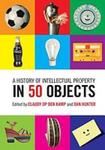
Zapruder Film
Brian L. Frye
THE ZAPRUDER FILM is not only the most important home movie ever made, but also the most thoroughly analyzed 26 seconds of film in existence. Shortly after noon on Friday, 22 November 1963, President John F. Kennedy was assassinated in Dallas, Texas. Atleast 32 people filmed or photographed some aspect of the event, but Abraham Zapruder captured the assassination itself more clearly and completely than anyone eise. His film was a key item of evidence in the government's investigation of the assassination, and the subject of lasting controversy, at least in part because copyright made it largely unavailable to the public until 1998.
-
Professional Responsibility: An Open-Source Casebook
Brian L. Frye and Elizabeth Schiller
We wanted this casebook to be as easy to use and understand as possible. Accordingly, we included not only cases, but also the text of the rules and restatements, as well as concise explanations of the relevant law. Each chapter of the book addresses a different issue, in the following format. First, it clearly and concisely explains the relevant law governing that issue. Then provides the relevant text of any statutes, Model Rules, sections of the Restatement of the Law Governing Lawyers, or other sources, with a link to an open-source versions of the full text, when available. It provides ...Read More
-
Introduction: Why Bibliography?
James M. Donovan
The occasion of the new volume of Sexual Orientation, Gender Identities, and the Law: A Research Bibliography perhaps leads some to ask, "Why bibliography? in these days of instant and abundant results from keyboard searches on increasingly intelligent computer tools, isn't the print bibliography quaintly old-fashioned?
-
The Philosophical Foundations of Wealth Transfer Taxation
Jennifer Bird-Pollan
One role of taxation in contemporary society is the expression of that society’ s beliefs about distributive justice. This chapter argues that this most effectively done by using a wealth transfer tax. The continued existence of wealth transfer tax systems, despite the relatively small amount of tax raised by such systems in comparison with the total size of most national budgets, speaks to important philosophical beliefs about fairness and equality and the way such forms of tax can help a society achieve those distributive justice goals. This chapter examines a variety of political philosophical views that are commonly held in ...Read More
-
Bob Jones University v. U. S., 408 U.S. 564 (1983)
David A. Brennen
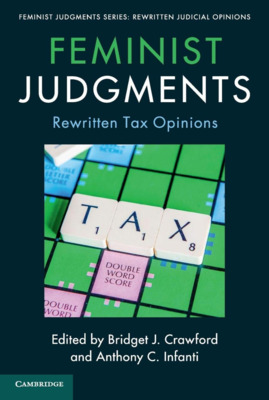
Could a feminist perspective change the shape of tax laws? Feminist reasoning and analysis are recognized as having tremendous potential to affect employment discrimination, sexual harassment, and reproductive rights laws - but they can likewise transform tax law (as well as other statutory or code-based areas of the law). By highlighting the importance of perspective, background, and preconceptions on reading and interpreting statutes, this volume shows what a difference feminist analysis can make to statutory interpretation. Feminist Judgments: Rewritten Tax Opinions brings together a group of scholars and lawyers to rewrite tax decisions in which a feminist emphasis would have ...Read More
-
Critical Reading for Success in Law School and Beyond
Jane Bloom Grisé
Critical Reading for Success in Law School and Beyond presents critical reading strategies in a systematic sequence so that students can become effective readers who are successful in both law school and in law practice. This reading system was developed by identifying the characteristics of expert readers at different stages of the reading process and then creating a curriculum to teach these skills. It contains essential ingredients for developing skills in reading comprehension as well as legal analysis, case evaluation, and case synthesis. Critical Reading starts with chapters on reading as an advocate and with focus and then introduces students ...Read More
-
Gaslight Lawyers: Criminal Trials and Exploits in Gilded Age New York
Richard H. Underwood
From the 1870s to the early 1900s, post-Civil War New York City was becoming a wonder city of commerce and invention, art and architecture, and emerging global prominence. The city and its innocent inhabitants needed to be protected from crime and corruption. Order had to be maintained. Then, as now, malefactors had to be brought to justice. But not every victim was quite so innocent, and not every defendant was as guilty as he (or she) looked.
The Gaslight Era has been called the Second Golden Age of the New York Bar. The book sheds new light on a gallery ...Read More
This book gallery showcases the books and chapters published by the College of Law's faculty. Some of these items have full-text, open access downloads for the book or chapter content. The majority do not.
Printing is not supported at the primary Gallery Thumbnail page. Please first navigate to a specific Image before printing.