-
Crossfire: Philosophy and the Novel in Spain, 1900-1934
The marriage of philosophy and fiction in the first third of Spain's twentieth century was a fertile one. It produced some truly notable offspring—novels that cross genre boundaries to find innovative forms, and treatises that fuse literature and philosophy in new ways. In her illuminating interdisciplinary study of Spanish fiction of the "Silver Age,” Roberta Johnson places this important body of Spanish literature in context through a synthesis of social, literary, and philosophical history.
Her examination of the work of Miguel de Unamuno, Pio Baroja, Azorin, Ramon Perez de Ayala, Juan Ramon Jimenez, Gabriel Miro, Pedro Salinas, Rosa Chacel, and ...Read More
-
Love and Remembrance: The Poetry of Jorge Manrique
Jorge Manrique was the greatest poet of fifteenth-century Castile and one of the three or four greatest in Spanish literature. Frank A. Domínguez offers here an introduction to Manrique’s poetry and the first book-length study of him in English in fifty years.
After presenting the biographical and historical context of Manrique’s poetry, Domínguez examines the poet’s love lyrics, describing the large fund of commonplaces and forms that Manrique’s verses share with those of other poets of his age. Manrique’s highly stylized language and parallel verse structures express the obsession of the lover with the beloved. Moreover, his attention to parallel ...Read More
-
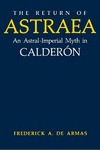
The Return of Astraea: An Astral-Imperial Myth in Calderón
In classical mythology Astraea, the goddess of justice, chastity, and truth, was the last of the immortals to leave Earth with the decline of the ages. Her return was to signal the dawn of a new Golden Age. This myth not only survived the Christian Middle Ages but also became a commonplace in the Renaissance when courtly poets praised their patrons and princes by claiming that Astraea guided them. The literary cult of Astraea persisted in the sixteenth century as writers saw in Elizabeth I of England the imperial Astraea who would lead mankind to peace through universal rule.
This ...Read More
-

Calderón: Three Comedies by Pedro Calderón de la Barca
This volume is a sequel to Four Comedies of Calderón (1980), which was hailed by reviewers as superb, faithful, and actable. The three comedies in the present volume are generally counted among Calderón’s masterpieces: Casa con dos puertas mala es de guardar (A House with Two Doors Is Difficult to Guard); No hay burlas con el amor (No Trifling with Love); Mañanas de abril y mayo (Mornings of April and May). For the first time theaters will have the opportunity of staging these three masterpieces of the Golden Age drama of Spain in accurate and charming English versions. The verse ...Read More
-

Iconography in Medieval Spanish Literature
The masterpieces of medieval Spanish literature have come to be known and loved by Hispanists, and more recently by others throughout the world. But the brilliant illuminations with which the original manuscripts were illustrated have remained almost totally unknown on the shelves of the great European libraries. To redress this woeful neglect, two noted scholars here present a generous selection from this great visual treasury including many examples never before reproduced.
John E. Keller and Richard P. Kinkade have chosen five representative works, dating from the mid-thirteenth century to the late fifteenth, to illustrate the richness of early Spanish narrative ...Read More
-
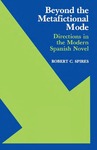
Beyond the Metafictional Mode: Directions in the Modern Spanish Novel
The term metafiction invaded the vocabulary of literary criticism around 1970, yet the textual strategies involved in turning fiction back onto itself can be traced through several centuries. In this theoretical/critical study Robert C. Spires examines the nature of metafiction and chronicles its evolution in Spain from the time of Cervantes to the 1970s, when the obsession with novelistic self-commentary culminated in an important literary movement.
The critical portions of this study focus primarily on twentieth-century works. Included are analyses of Unamuno's Niebla, Jarnés's Locura y muerte de nadie and La novia del viento, Torrente Ballester's Don Juan, and three ...Read More
-
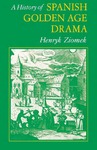
A History of Spanish Golden Age Drama
Spain's Golden Age, the seventeenth century, left the world one great legacy, the flower of its dramatic genius—the comedia. The work of the Golden Age playwrights represents the largest combined body of dramatic literature from a single historical period, comparable in magnitude to classical tragedy and comedy, to Elizabethan drama, and to French neoclassical theater.
A History of Spanish Golden Age Drama is the first up-to-date survey of the history of the comedia, with special emphasis on critical approaches developed during the past ten years.
A history of the comedia necessarily focuses on the work of Lope de Vega and ...Read More
-
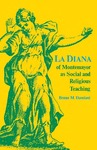
La Diana of Montemayor as Social and Religious Teaching
Jorge de Montemayor’s great pastoral novel La Diana (1559), one of the fountainheads of Spanish Renaissance literature, has often been regarded as a work written merely to amuse an effete courtly world. Bruno M. Damiani argues here that, far from being simply a “pastoral dream,” Diana has profound socio-historical and religious dimensions, and that Montemayor’s intentions in it were largely moral and instructive.
The timeless, idyllic nature which forms the essence of the pastoral is, in the case of Diana, inextricably bound up with the grace and sophistication of urban Spanish culture. Indeed, this study shows, Montemayor’s shepherds and shepherdesses ...Read More
-
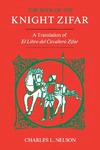
The Book of the Knight Zifar: A Translation of El Libro del Cavallero Zifar
The Book of the Knight Zifar (or Cifar), Spain’s first novel of chivalry, is the tale of a virtuous but unfortunate knight who has fallen from grace and must seek redemption through suffering and good deeds. Because of a curse that repeatedly deprives him of that most important of knightly accoutrements—his horse—Zifar and his family must flee their native India and wander through distant lands seeking to regain their rank and fortune. A series of mishaps divides the family, and the novel follows their separate adventures—alternatively heroic, comic, and miraculous—until at length they are reunited and their honor restored.
The ...Read More
-
Poetry of Discovery: The Spanish Generation of 1956-1971
A leading critic of contemporary Spanish poetry examines here the work of ten important poets who came to maturity in the immediate post-Civil War period and whose major works appeared between 1956 and 1971: Francisco Brines; Eladio Cabañero; Angel Crespo; Gloria Fuertes; Jaime Gil de Biedma; Angel González; Manuel Mantero; Claudio Rodríguez; Carlos Sahagún; and José Angel Valente.
Although each of these poets has developed an individual style, their work has certain common characteristics: use of the everyday language and images of contemporary Spain, development of language codes and intertextual references, and, most strikingly, metaphoric transformations and surprising reversals of ...Read More
Printing is not supported at the primary Gallery Thumbnail page. Please first navigate to a specific Image before printing.